Believers in Signs Bet on Sure Things
The Montgomery Advertiser, 1927. View the original
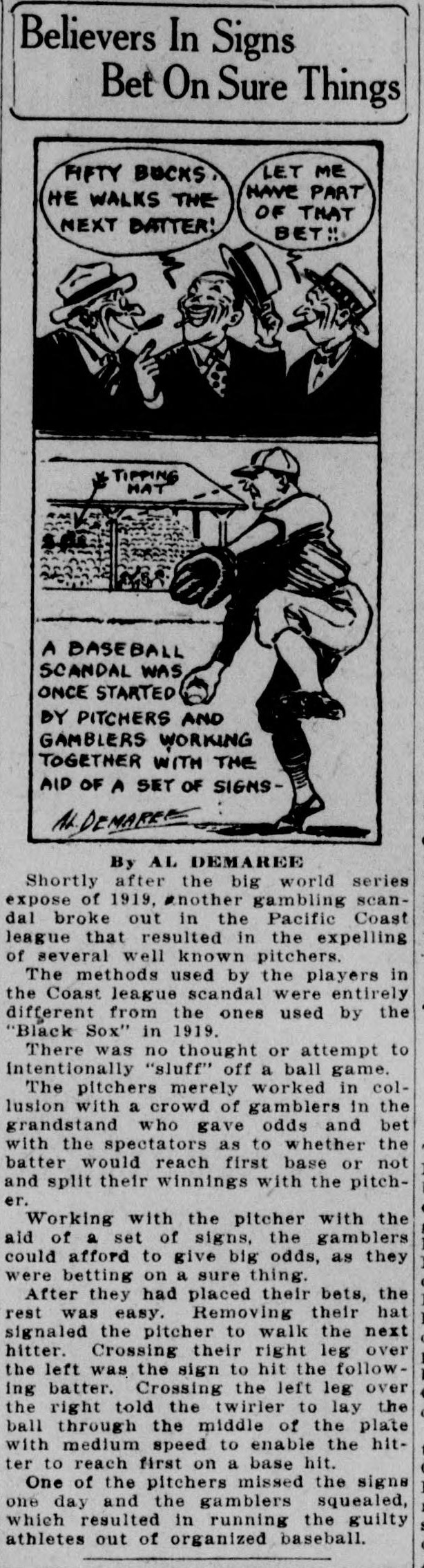
1927: Al Demaree draws the gambling scandal he pitched through, complete with the hat signal that walked the next batter. The scheme worked until a pitcher missed the signs, and it was the gamblers who squealed.
The men in the top panel are betting fifty bucks on a walk. The man on the mound is checking the grandstand for a hat.
“Shortly after the big world series expose of 1919, another gambling scandal broke out in the Pacific Coast league that resulted in the expelling of several well known pitchers.” So begins the story under the cartoon, and its author knows the terrain: Al Demaree pitched eight National League seasons before he took up the pen, and the Advertiser was one of a couple hundred papers carrying his work.
The Coast league scheme, Demaree explains, was nothing so crude as throwing games. “There was no thought or attempt to intentionally ‘sluff’ off a ball game. The pitchers merely worked in collusion with a crowd of gamblers in the grandstand who gave odds and bet with the spectators as to whether the batter would reach first base or not and split their winnings with the pitcher.”
Merely. The signal code deserves preservation in full: “Removing their hat signaled the pitcher to walk the next hitter. Crossing their right leg over the left was the sign to hit the following batter. Crossing the left leg over the right told the twirler to lay the ball through the middle of the plate with medium speed to enable the hitter to reach first on a base hit.”
A man in the bleachers crossing and uncrossing his legs was running the ball game. Think about that the next time somebody near you fidgets in the late innings.
The end came the way it always comes: “One of the pitchers missed the signs one day and the gamblers squealed, which resulted in running the guilty athletes out of organized baseball.” Not caught. Squealed on, by their own backers, over a missed sign.
The same page carried the Tars stealing another ninth-inning game from the Lions, all of it presumably on the level.
| Place | Montgomery, Alabama |
|---|---|
| Year | 1927 |
| Newspaper | The Montgomery Advertiser |
| Posted | |
| Tags |